
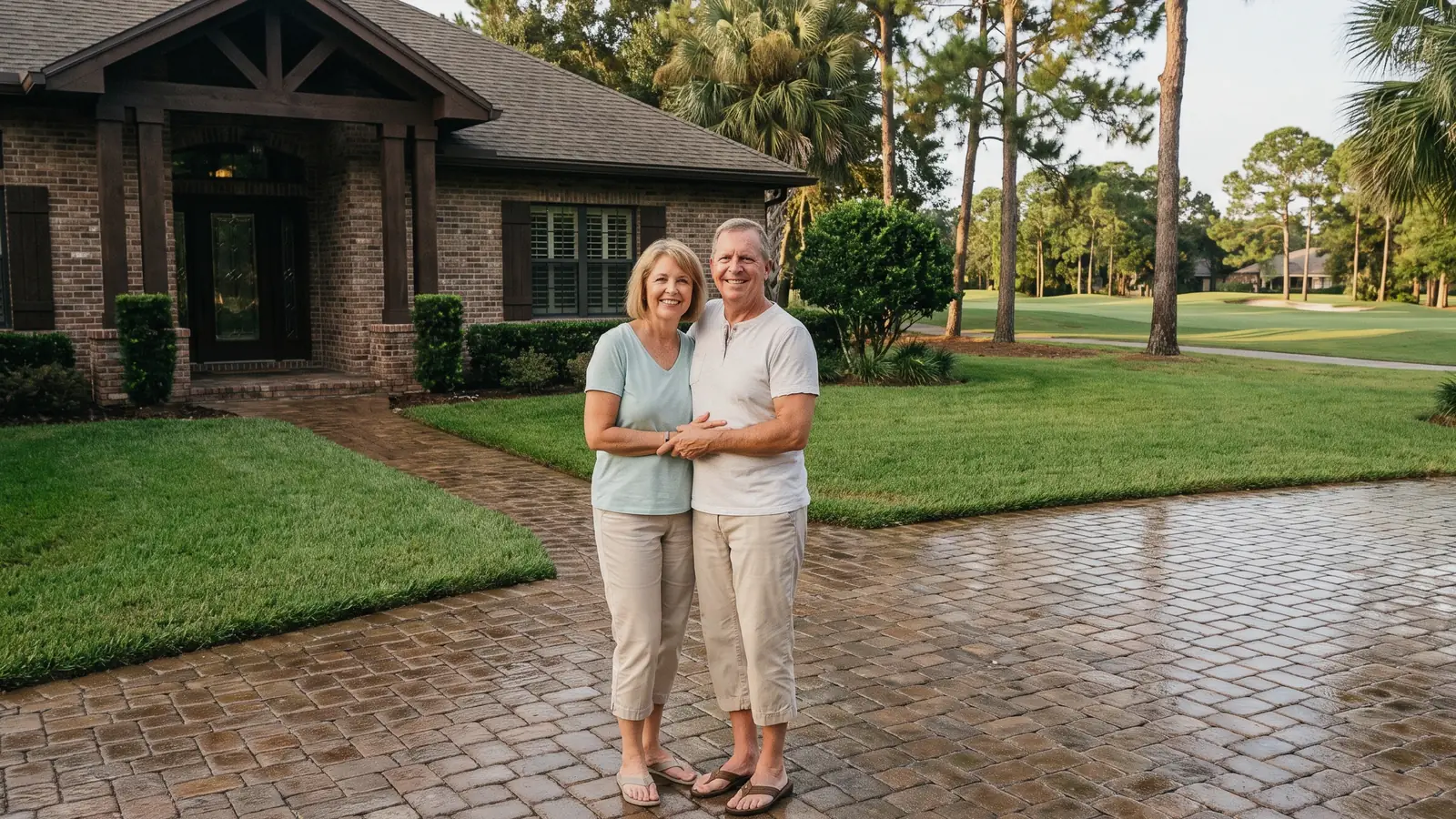
Paver sealing for Seminole Heights homes
Paver Sealing in Seminole Heights, FL
Brick pavers behind a Seminole Heights bungalow can get a free sealing estimate when you call (656) 254-5516.
- Brings out deeper paver color
- Fresh joint sand helps lock pavers in place
- Gives weeds less room to grow
- Makes the surface easier to keep clean
- Free estimate, no obligation
Request a Free Estimate
Free, no obligation.
Fast, careful paver sealing in Seminole Heights
Paver sealing in Seminole Heights starts with a free estimate from a local contractor who cleans, re-sands and seals back patios, walks and drives. A local contractor replies within 1 business day, often much sooner. To get on the list, call (656) 254-5516 and mention your street.
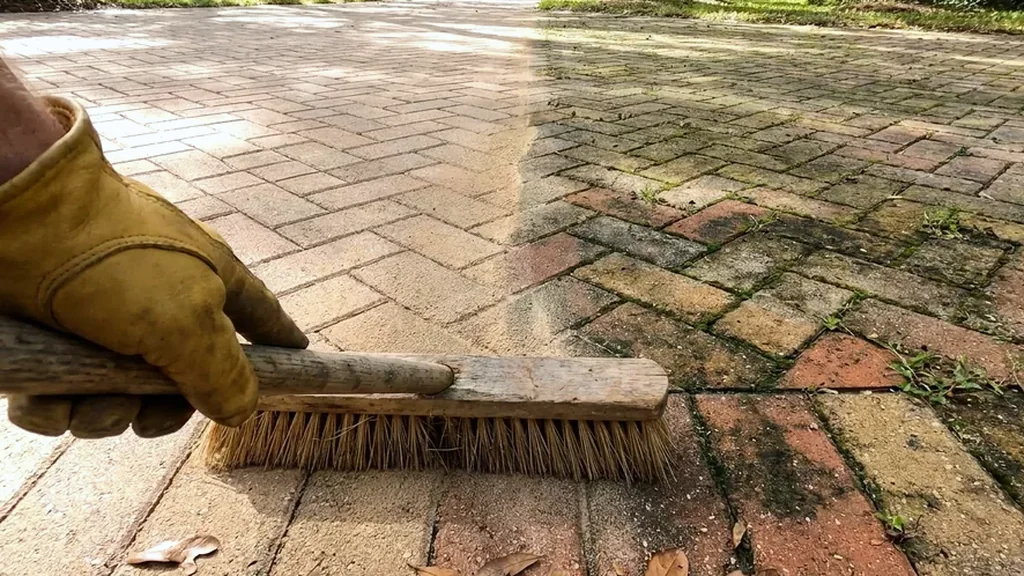
Picture the brick pavers behind a bungalow, gone green and patchy under the oaks. A wash, new sand and a coat of sealer turn them into a patio worth sitting on again, with warm brick color and clean lines between the stones. If you want to know what yours needs, you can ask for a free estimate.
Why hire a local paver sealing contractor in Seminole Heights?
Seminole Heights homeowners tend to choose a local contractor because the trees are old, the lots are small and the historic rules are real. To hear how that fits your property, ask for a free estimate.
A free look, then a price
The contractor walks your Seminole Heights patio, walk or drive at no charge, measures it and gives you a price in writing before any work is agreed.
A range for comparison
Tampa Bay companies commonly publish $1.25 to $2.50 per square foot to clean, sand and seal. Compare every Seminole Heights bid to that range before you decide.
Care around the house
A contractor who works older homes knows to keep rinse water off wood siding and porch trim, and to ask before using a strong cleaner near paint.
You choose, with no strings
Finish, date and the decision to go ahead are yours. A Seminole Heights estimate carries no obligation.
Get Your Free Estimate in Seminole Heights
Tell us about your pavers in Seminole Heights.
Free, no obligation
What paver problems show up most in Seminole Heights?
Tannin stains from old live oaks
A Tampa Bay paver company notes that live oaks line older neighborhoods around the bay, and their leaves and acorns stain pavers that are unsealed or thinly sealed. Seminole Heights was platted over a century ago, so its trees have had time to grow. Leaves sit on a damp walk and leave brown marks that look like spilled tea. Sealing helps stop the soak-in, but only after the old stain is washed out. Fall is the worst time, when leaves and acorns pile up on a patio, and a pile left for a week can print a brown outline on the stone. Sweep often and ask the contractor what to expect from a fresh coat. Old Seminole Heights runs from Florida Avenue to Interstate 275 and from Hanna Avenue to Osborne Avenue, and its streets have had a century for the trees to mature.
Small lots with little room for water to go
The standard early home was a five-room bungalow on two lots, with front and back porches. That leaves a modest yard, so a patio or walk often sits close to the house. Rain runs off the roof onto the pavers, and a porch with a low eave sends it all to one spot. The edge by the foundation stays damp and grows green film first. Pavers along a porch step catch the same drip every storm. Clean that strip carefully and make sure the joints are full. Suwanee Heights, platted in 1912 beside the first subdivision, followed the same pattern of east-west houses on modest lots.
Brick pavers where concrete is the norm
The city's guidelines call concrete the prevalent paving in the district and say brick pavers and hexagonal pavers are allowed inside the lot. If you have pavers, they are likely in the back or the side. Pavers need sand in their joints, and concrete does not. That makes joint sand a Seminole Heights concern for patios and side walks in a way it is not for a scored concrete drive. Gaps and weeds are the first sign. A patio with thin joints rocks a little when you step on it. The city's guidelines even list brick and paver streets as something to maintain, so paving with sand joints has long been part of the neighborhood.
Storms that wear the joints
The rainy season runs from late May to early October, and July to early September brings the heaviest rain. Near-daily summer storms speed joint sand erosion, a Tampa Bay company says. A patio that was filled a few years back may be down to bare gaps. Fresh sand and a coat of sealer give the joints a better chance of holding. Look along the low edge of a patio first. That is where sand gathers or leaves after a storm. A patio filled three summers ago may now have gaps wide enough to hide a pencil tip.
A coat from an owner long gone
Homes here date from 1911 on, and many have changed hands again and again. A patio may carry a coat nobody wrote down. Water-based sealer cannot go over solvent-based sealer, so a coat of unknown type is a real question. A test spot tells the contractor what is there, so tell them what you know. If a prior owner left receipts or a product name, hand those over. It saves guessing and avoids a mismatch. The Seminole Heights Residential District alone has 325 contributing structures, most of them private homes, and each has had its own run of owners and its own repairs.
Do the historic district rules in Seminole Heights cover paver sealing?
They might cover some paver work, but the city's own text does not name sealing, so it pays to ask. The Seminole Heights guidelines say a change to a driveway or pavement needs a Certificate of Appropriateness before work starts, and minor changes may be approved by staff. Sealing an existing surface is not a replacement, but a quick question to the preservation office can settle it. When you know, ask for a free estimate.
The Seminole Heights Residential District joined the National Register in 1993, and Tampa made it a local historic district in 1995. It has 325 contributing structures, most of them private homes, and Hampton Terrace was added as its own national district in 1999. If you live in either, mention it to the contractor, since a historic address can change how a job is planned. Call (656) 254-5516 and say which district you are in.
The guidelines are friendly to pavers inside the lot. Brick pavers, hexagonal pavers and quarry tile are all listed as acceptable inside the lot, for access to buildings. They ask that visible drives match the neighborhood's concrete ribbons and scored slabs, which are typical here. Tell the contractor what material you have when you ask for a free estimate, and mention whether the pavers are in front, along the side or behind the house.
What does paver sealing cost in Seminole Heights?
Published prices in the region run $1.25 to $2.50 per square foot for cleaning, sanding and sealing. In Seminole Heights the price moves with the amount of tannin, the sand needed and any old coat. A small patio can hit a company's minimum charge, which one Tampa Bay company puts between $500 and $1,000. To see where yours falls, ask for a free estimate.
Access counts too. A patio reached through a narrow side gate means more carrying, and pavers under heavy shade take more washing, with heavy tannin or algae adding a second pass. Doing the patio, the walk and any steps in one visit can lower the cost per square foot. Call (656) 254-5516 and the contractor can say which factors fit your property.
| Paved area | Typical example | Clean, sand and seal |
|---|---|---|
| 300 sq ft | Small patio or walkway | $375 to $750 |
| 600 sq ft | Two car driveway | $750 to $1,500 |
| 1,000 sq ft | Large driveway or pool deck | $1,250 to $2,500 |
| 1,500 sq ft | Driveway plus pool deck | $1,875 to $3,750 |
Math based on the $1.25 to $2.50 per square foot that Tampa Bay paver companies publish. Your contractor sets the actual price after seeing the surface. Repairs, leveling and stripping failed sealer are usually extra.
How does a paver sealing job work in Seminole Heights?
Walk the lot with the contractor
The visit covers the pavers and what touches them: porch steps, siding, trim, tree roots and trees. Lifted stones by a root get special attention. You are asked about earlier sealing, since water-based sealer will not bond to solvent-based. Drainage, shade and low spots are noted. If your home sits in a historic district, say so here.
Wash, with the house in mind
Tannin, green film and porch-roof drips come off first, along with the gray haze that builds where leaves sit. Pressure stays moderate, and rinse water is kept off wood siding and posts. Chairs, pots and mats are moved so the stone below is cleaned too. A second pass handles stubborn stains, and the contractor tells you which marks may only fade.
Fill the joints again
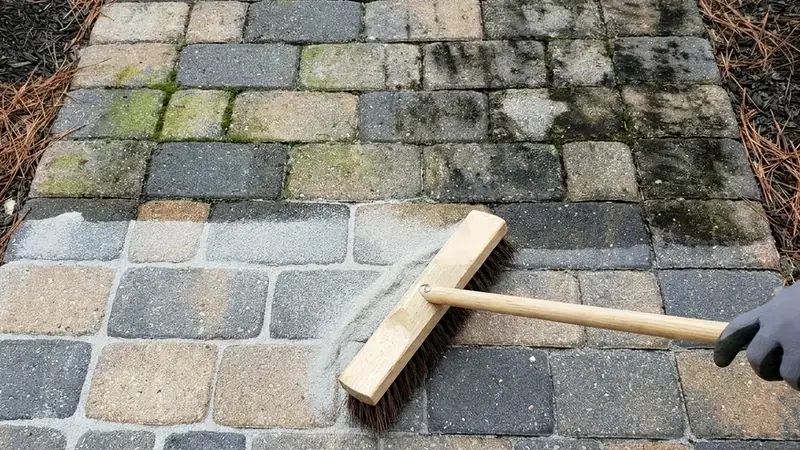
The wash takes the sand with it. Fresh sand is swept in until the joints are full, which helps a patio under oaks stay locked. A final sweep clears the loose grains. Extra goes in where water runs.
Check the dry-out
Sealer needs dry stone, and shaded patios behind old bungalows hold moisture. The contractor tests before starting, and waits if needed. Damp stone under a fresh coat can turn the finish cloudy. One lost day beats a redo.
Apply the coat and set the rules
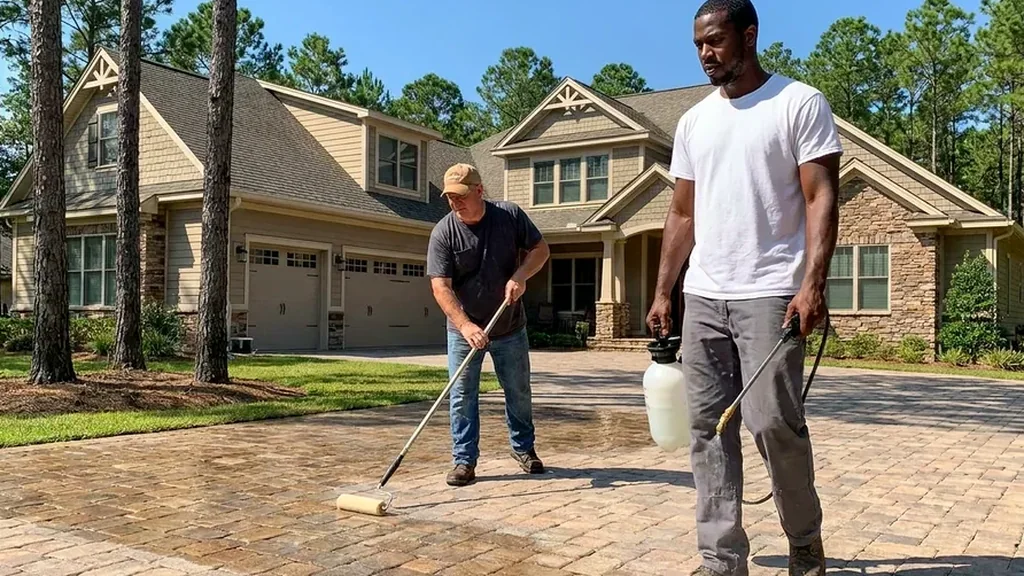
Sealer goes on evenly over stone and joints, with steps and edges finished by hand. You get the keep-off time for feet and furniture. Chairs return when the contractor says so. Keep sprinklers off the surface until then.
Complete paver services in Seminole Heights
The work runs in order: wash, re-sand, dry, seal. The wash takes off tannin, green film and dirt, and fresh sand goes into the joints next. Sealer goes on once the stone is dry, so nothing is trapped underneath. Back patios are small, though shade and storms can stretch the time, so call (656) 254-5516 to learn how long each step takes on your pavers.
Most pavers in Seminole Heights are on back patios, side walks and the paths to porches. Those surfaces sit under trees, near foundations and beside wood steps, which is where moss and stains collect. Small jobs take careful hand work. Tell the contractor each area you want done when you ask for a free estimate.
You will choose between water-based and solvent-based sealer, and any old coat narrows that choice, so the first visit includes a look at what is down. Then comes the finish. Matte looks right beside a Craftsman porch with its wide eaves and tapered posts, and a wet look deepens color but shows scuffs sooner. Call (656) 254-5516 and ask to hear how each finish would look on your pavers.
Weather sets the calendar. Sealer needs a dry surface, and from late May to early October rain is common. Shaded back patios under oaks dry slowest, so those jobs go last in the day. To check what dates are open, ask for a free estimate.
Questions to ask before you hire
- Will the new joint sand stay in place once the sealer is down?
- How do you protect my lawn, shrubs and flower beds from the wash water and the sealer?
- How many days should the grill, the planters and the kids' bikes stay off the finished surface?
- Would you use a different sealer on my pool deck than on my driveway?
- Can the sealer be chosen to suit how my pavers look now, faded or still rich in color?
- Do you seal the steps, borders and edges, or only the flat areas?
- Is there an extra charge if the job runs into a second day?
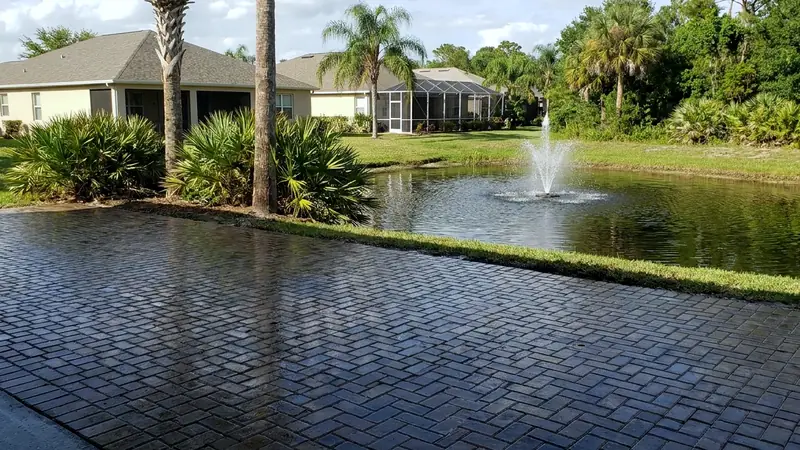
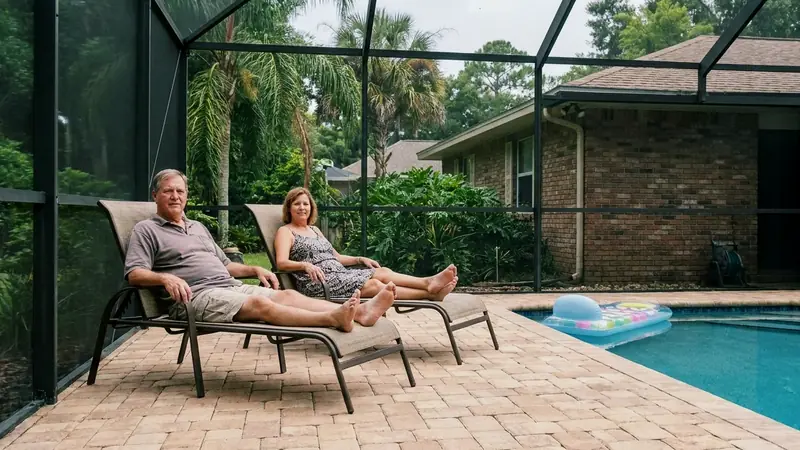
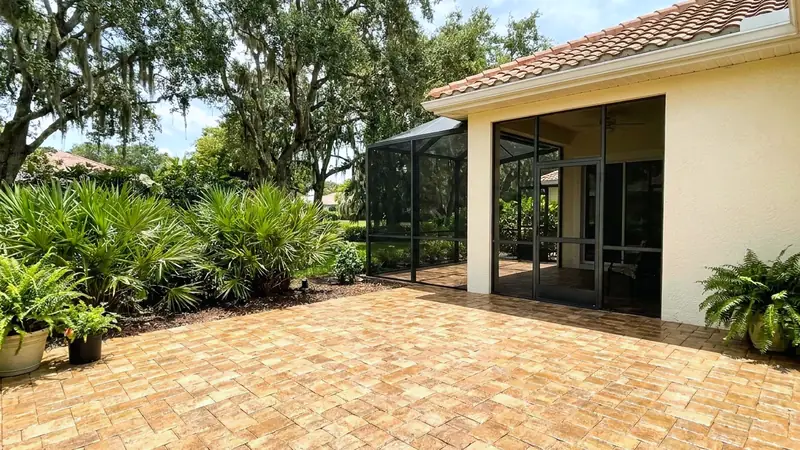
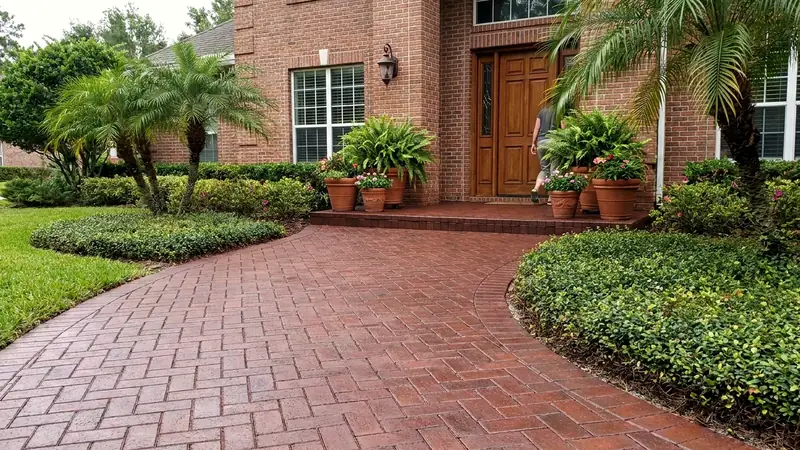
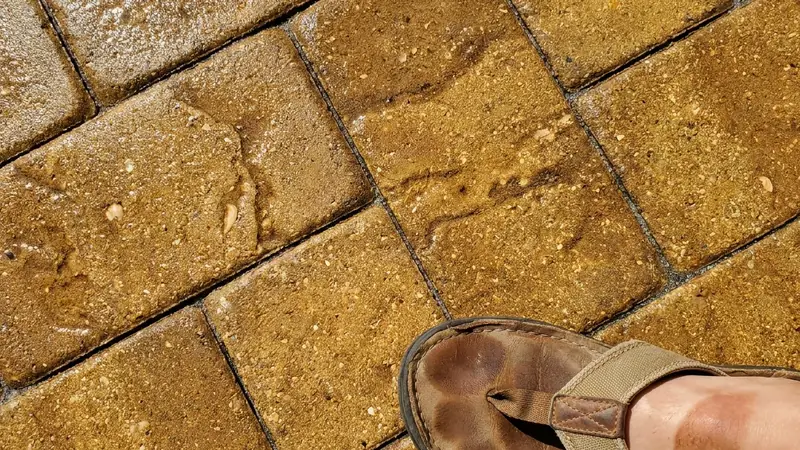
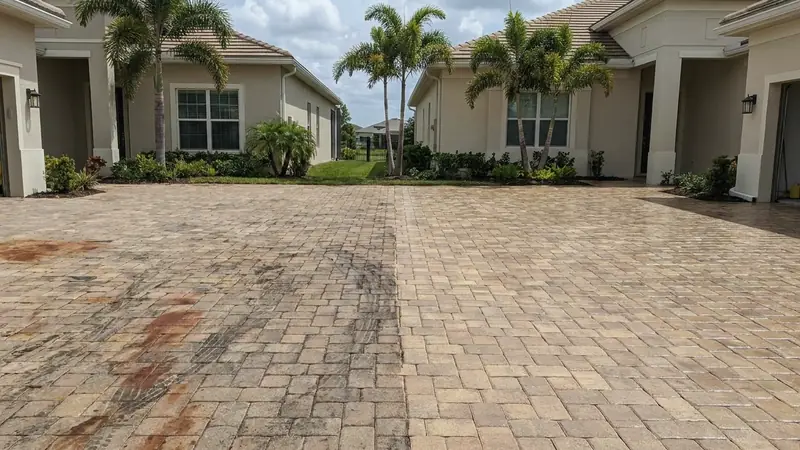
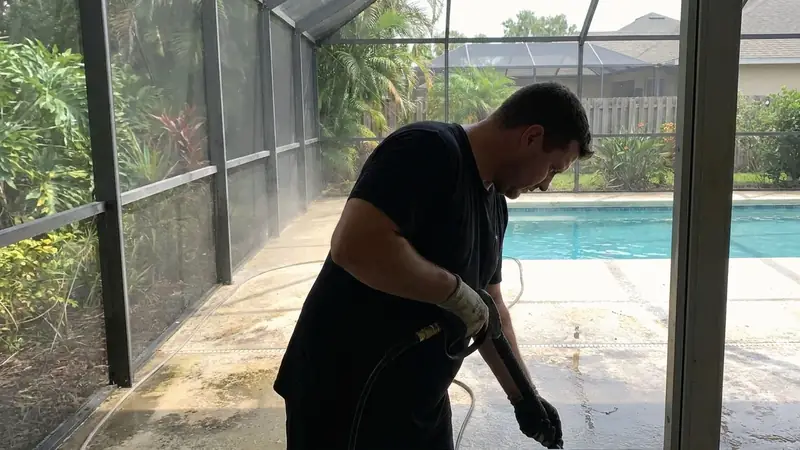
What do sealed pavers look like around Seminole Heights?
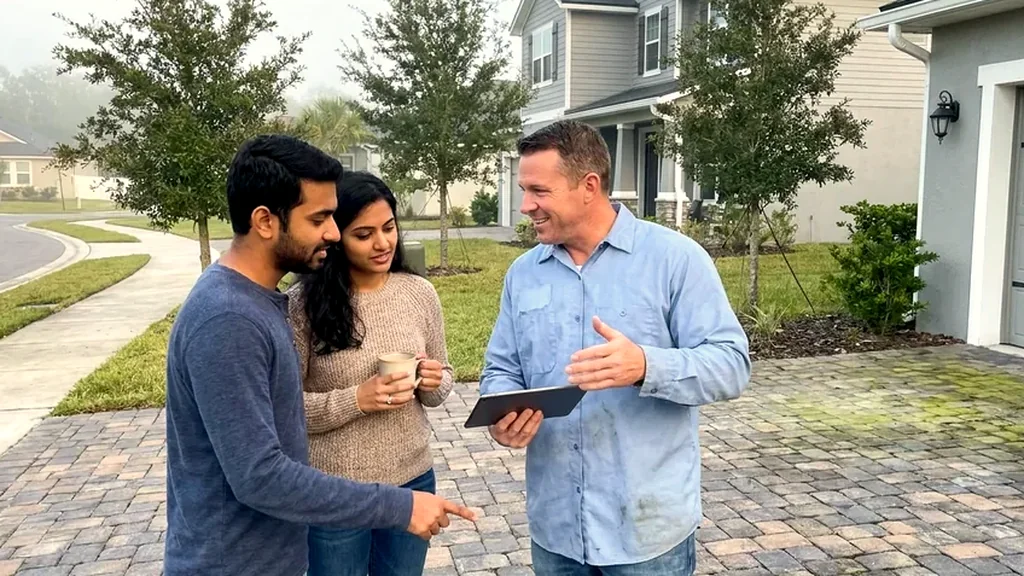
Why local matters in Seminole Heights
A contractor who works Seminole Heights knows the lots are small and the homes are old. That means careful access and gentle rinsing near wood. It also means knowing the historic district rules exist, so you are not caught off guard. Call (656) 254-5516 to reach a contractor who works these older streets.
Local knowledge also shapes timing. The area sits about three miles north of downtown Tampa, and summer storms build in the afternoon. A local crew starts early, watches the sky and moves the date when the stone is wet. To ask how rain delays are handled, ask for a free estimate.
Seminole Heights has three neighborhoods and two national historic districts, and a contractor who knows them avoids guesswork. Both national districts sit inside Old Seminole Heights, one of the three neighborhoods. If you are unsure whether your street is in one, say so when you ask for a free estimate. There is no obligation to hire.
What should I know about Seminole Heights' bungalow streets before sealing?
Seminole Heights began in 1911 as Tampa's first suburb, three miles north of downtown. A developer named Young laid out 40 acres, and a streetcar line made the commute work, with the first bungalows set east to west and priced from $5,000. If your home is on the first streets built, ask for a free estimate.
The neighborhood still has a church and a high school from its early years, Seminole Heights United Methodist and Hillsborough High School, both examples of older Tampa building. The Hillsborough River borders it, with Rivercrest and Epps parks giving access. The Garden Center hosts festivals, and Suwanee Heights was platted next door in 1912, also with east-west houses. Near one of these places, call (656) 254-5516 and ask what your pavers need.
Frequently Asked Questions
How many years can Seminole Heights pavers go between coats?
Companies commonly quote two to five years, and a shaded patio may sit at either end. Tannin from oak leaves can stain a worn coat faster. A contractor can look at yours and say where it stands.
What is the average cost to seal pavers in Seminole Heights?
Published rates around Tampa Bay run $1.25 to $2.50 per square foot for cleaning, sanding and sealing. Small back patios can fall under a company's minimum charge. Ask for the measured area and the minimum together.
Which sealer should I use on pavers in Seminole Heights?
It depends on the stone and on what was applied before. Water-based sealer will not bond to a solvent-based coat. Matte sits well beside a Craftsman porch, and a wet look deepens the color.
Is there a downside to sealing pavers?
Sealer wears and has to be renewed. A wet look scuffs sooner than matte. Shade and rain can delay a job, and an old solvent-based coat limits the next product.
Is it better to roll or spray paver sealer?
Contractors use both. Spraying is quick over a wide area, and rolling pushes sealer into the joints and keeps it off a wood porch. On a small Seminole Heights patio, ask which method fits.
Can I put new pavers on my front drive in the historic district?
The city's guidelines say visible drives should match the neighborhood, with concrete ribbons and scored concrete typical and pebble or asphalt discouraged. Brick pavers are listed as acceptable inside the lot. Any driveway or pavement change needs a Certificate of Appropriateness first.
Does sealing count as a change under the city's rules?
The guidelines name replacement and modification of driveways and pavement, not sealing. Because they do not name it, a short question to the preservation office is the safest step. Ask before you book if your home is in a historic district.
Why do my patio pavers turn brown in the fall?
Leaves and acorns from live oaks leave tannin stains on unsealed or worn pavers, a Tampa Bay paver company says. The stain has to be washed out before sealing. A sealed surface resists it better afterward.
Will sealing stop weeds in the joints?
By itself, no. Sealing along with firm joint sand can cut weed growth, a Tampa Bay company says. Gaps that stay open still invite weeds.
What should I clear off the patio before the contractor comes?
Chairs, pots, grills and mats should come off the stone, and sprinklers may need to be switched off. Clearing the patio lets every stone get cleaned. Cover anything near the house that could get splashed.
Ready for a Free Estimate in Seminole Heights?
Call (656) 254-5516 and tell us about your pavers.
Free, no obligation